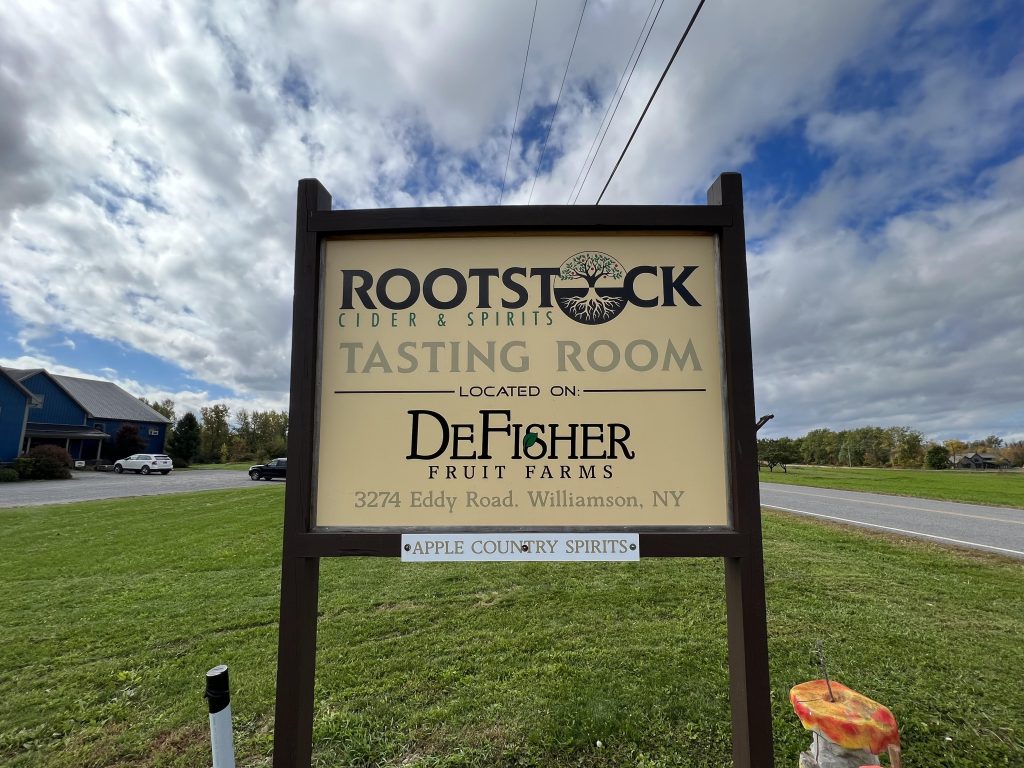
Williamson, N.Y. — Being in the third-largest apple-producing county in the country has its perks. For Rootstock Ciderworks, it’s a way of life.
Founded by David DeFisher in 2012, the cidery uses homegrown ingredients to create new flavor combos for everyone to enjoy.
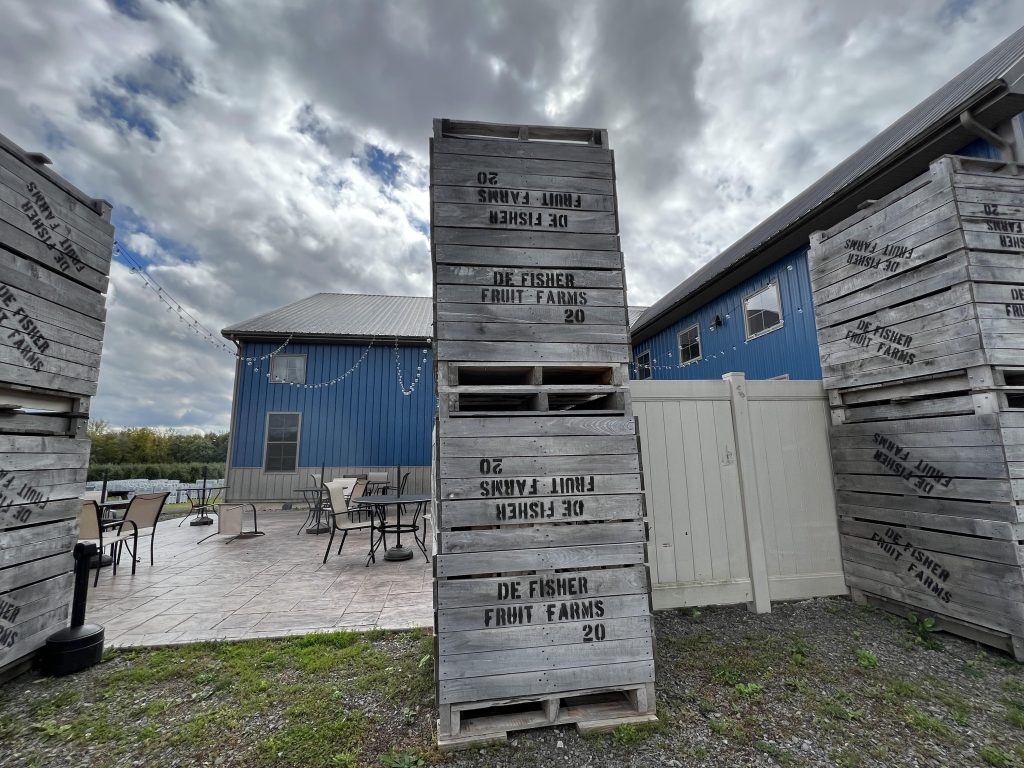
But the tradition behind Rootstock has a long history, beginning over 80 years ago in the orchards of DeFisher Fruit Farms.
A Long History of Tradition Turns into Experimentation
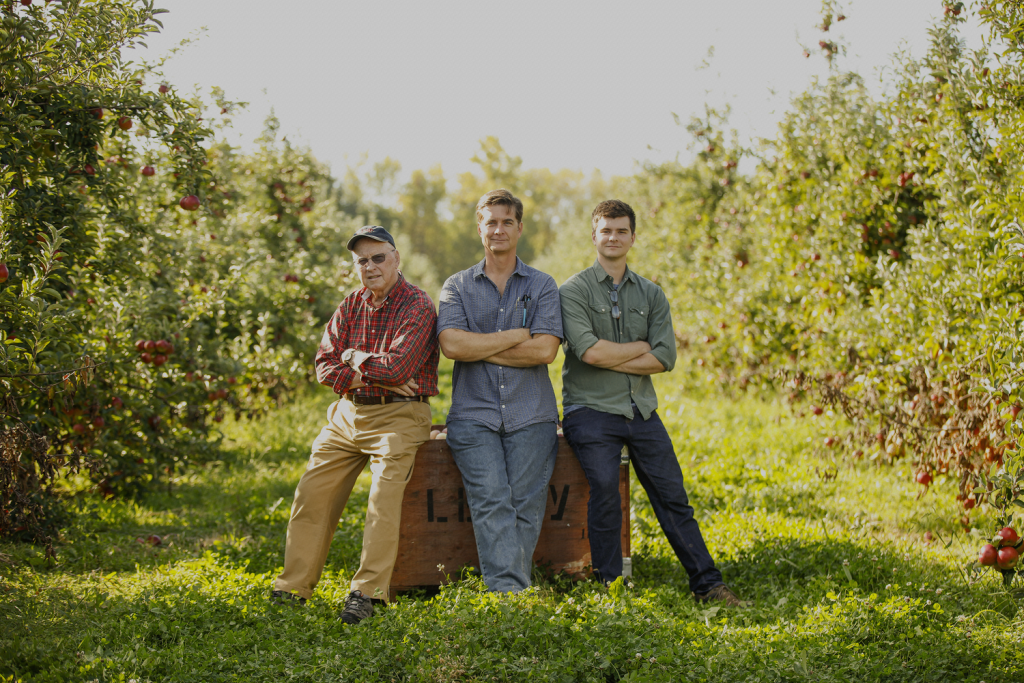
It has become a tradition for the DeFisher family to grow apples in Wayne County. The fifth-generation fruit farm has been growing various apple varieties and stone fruits such as peaches and cherries. The DeFishers have also stayed the course on their location, holding the same 500-plus acres of orchards for over 80 years.
But according to Rootstock General Manager and fifth-generation farmer Luke DeFisher, the family began exploring other options for their apples over a decade ago.
“We had come to this point in 2010 whereas a processing fruit grower, the price of growing types of apples for applesauce and juice was getting more and more competitive,” DeFisher said. “And so we started to think more creatively.”
The DeFishers quickly realized their culinary, dessert, and heritage apple varieties were well-suited for making alcohol. And David DeFisher took advantage of the opportunity, founding Apple Country Spirits in 2011.
Using fruits from the family farm, David dove headfirst into turning them into distilled fruit spirits ranging from flavored vodkas to brandies, liqueurs, and applejack. The risk paid off, as hard liquor fans had great feelings about the local product.
But DeFisher was not finished with his experimentation of creating alcohol with fruit. And a year later, he made his first batch of hard cider. And from that point on, Rootstock Ciderworks was born.
Since then, Rootstock has opened its tasting room on the grounds of the family farm. And like other cideries in the region, the entire cidermaking process is done in-house.
Rustic and In-House Operations
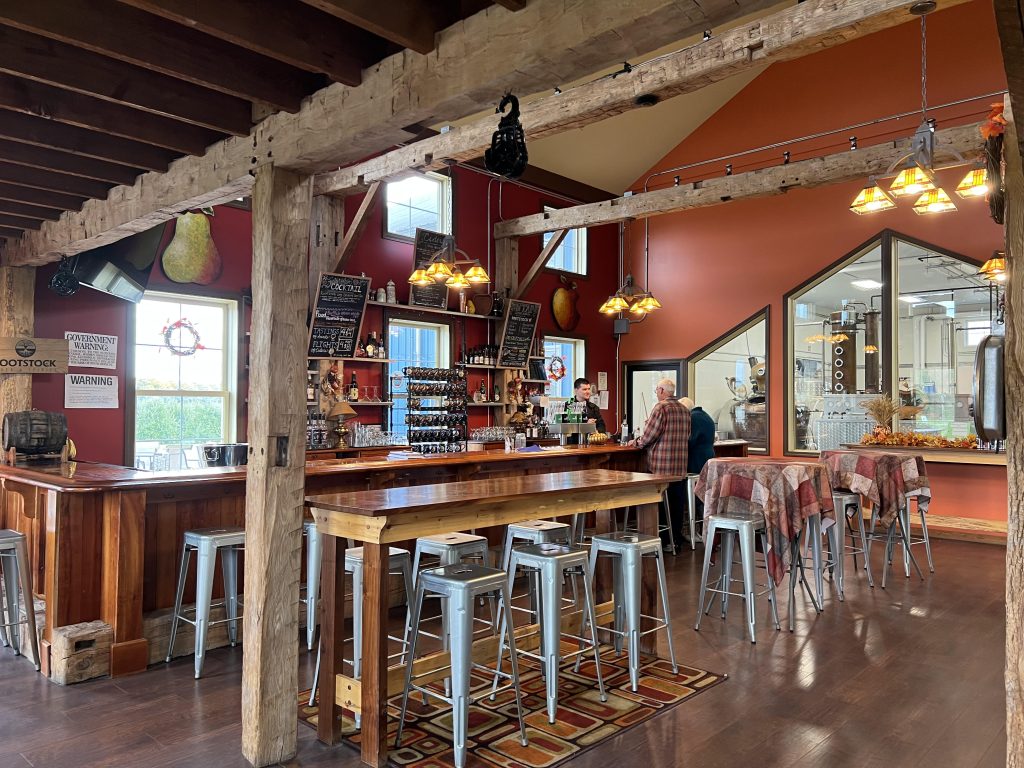
As a family operation, repurposing is important for the DeFisher family. And it shows inside their tasting room.
Inside, visitors can choose various tables and wooden beams scattered throughout the barn-like structure made from trees grown and cut down from the farm property.
But what sticks out above everything else is their bar. The L-shaped structure has a dark stain finish and router accents around the edges. It may seem small, but the bar pairs perfectly with steel stools that slide perfectly underneath.
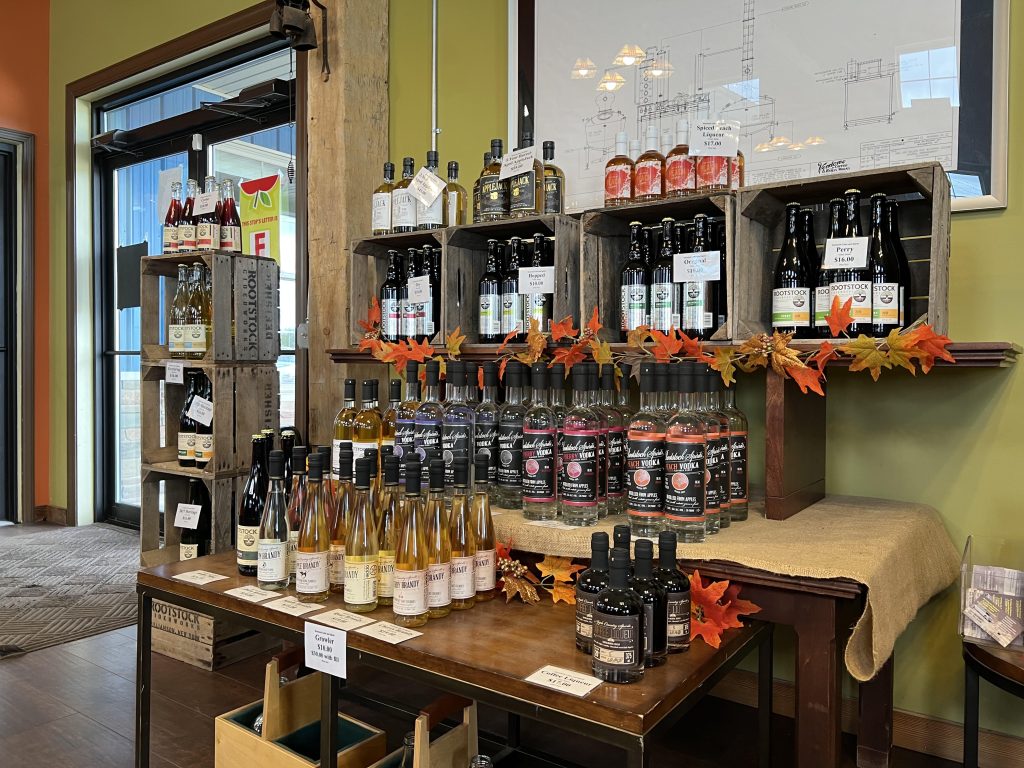
Around the tasting room, visitors can view and purchase Rootstock’s creations for take-home consumption. These include their varieties of ciders in 12-ounce cans and 750-milliliter bottles. Rootstock also offers bottles of their spirits to purchase, including their fan-favorite peach vodka and five-year barrel-aged applejack.
However, the tasting room is just a section of the 10,000-square-foot structure. The magic behind Rootstock Cider and Spirits is on the south side of the building in their production rooms.
The left and middle sections house the barrel house and distilling equipment for Rootstock’s spirits offerings. But the right side is where Roostock hard cider comes together from pressed apples to the finished product.
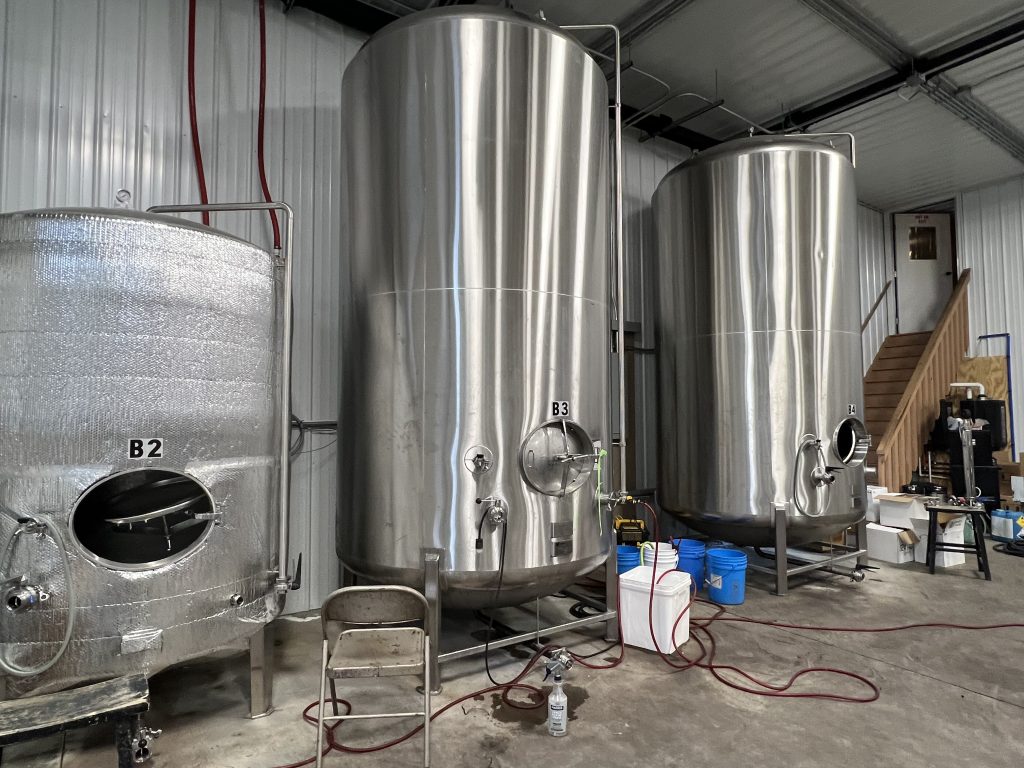
Inside, filtering and fermentation tanks mix fresh pressed apple juice, yeast, and other ingredients to create hard cider. And when the cider is ready, the employees at Rootstock fire up their canning machine, creating six packs for fans to enjoy.
Making cider is a step-by-step process, and DeFisher says the timeline for creating cider can depend.
“If you are making a cider that is not that aged, you can get that turned around in seven to eight weeks from pressing the apples to bottling,” DeFisher said. “You can be a little bit faster, depending on the equipment you have and the processes, but that is where we are at right now.”
The Cider Itself
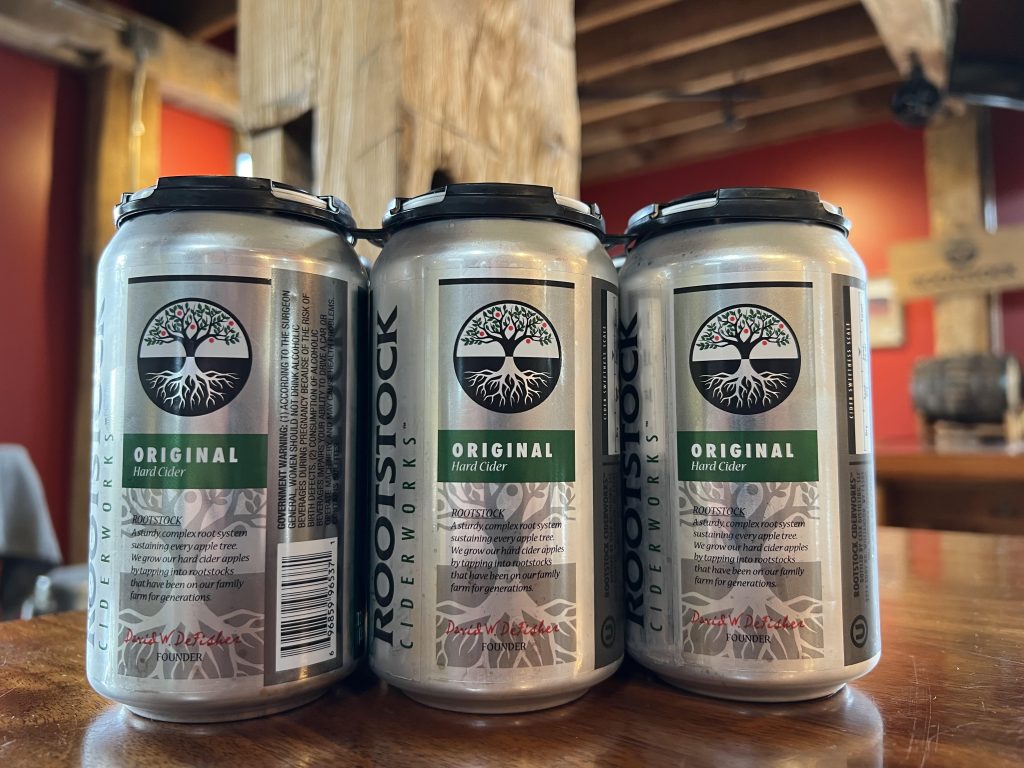
Since producing its first batch in 2012, head cidermaker Alex Robb is continuing to experiment with new combinations at Rootstock.
Every week, the tasting room has staple options for visitors to enjoy. But if someone is new to trying cider, DeFisher suggests their original cider.
“[Rootstock original] is such a great starting point,” DeFisher said. “It’s a great middle-of-the-road cider being a bit on the sweeter side.”
The DeFishers also offer limited-release ciders that are on a seasonal rotation. One of those is their Belgian, made with beer yeast and Ben Davis apples, with aromas of peach and apple blossom.
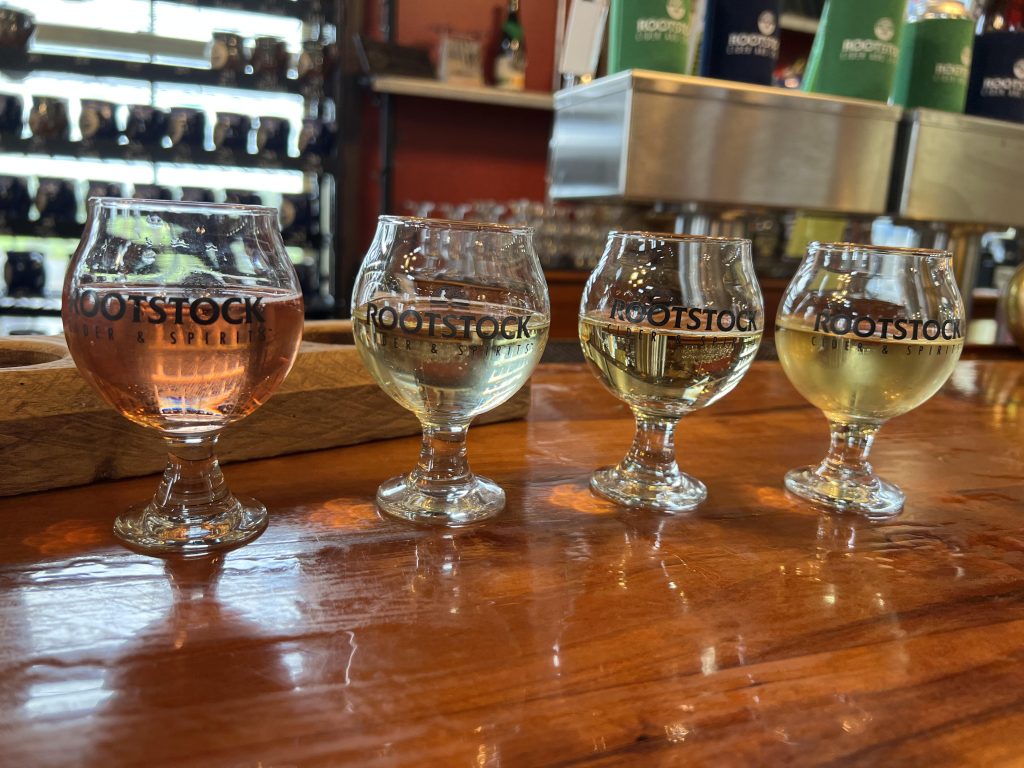
At the taproom, visitors can purchase a flight of four three-ounce ciders or sixteen-ounce glasses. They also offer tastings of their craft spirits to enjoy inside or outside on their patio.
But Rootstock has also expanded its cider sales into local businesses.
“We went that direction because we want to make it more accessible because some people cannot make it out [to the taproom],” DeFisher said. “I wanted it to be something where people can go to their favorite store, pick it up, and try it at home on their terms.”
Rootstock sells its cider in many local businesses in the Rochester region, including Tops Friendly Markets and Wegmans. However, Rootstock has big plans for the future.
The Future
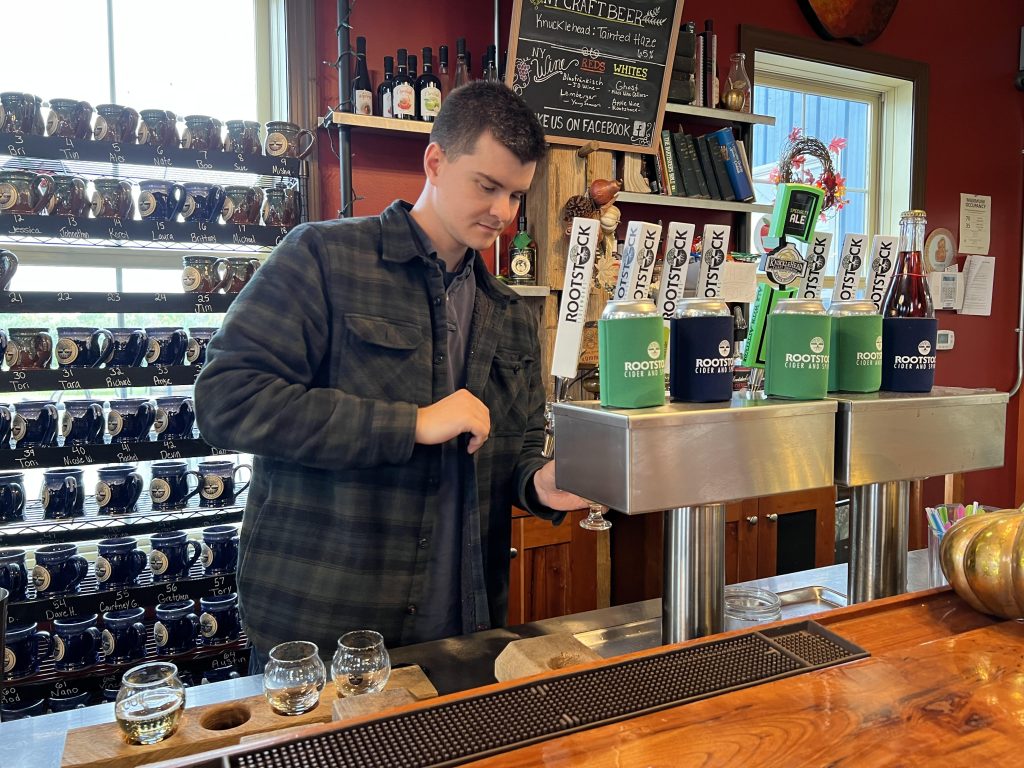
Since diving into the hard cider scene in 2012, Rootstock has undergone some changes. During the COVID-19 Pandemic, Rootstock merged its cider business and spirit business under one umbrella. The merger changed the business’s name to Rootstock Cider & Spirits.
As for new ciders, DeFisher says more experimental combinations are coming.
“We love to experiment and are working with others to create new cider offerings for people to enjoy,” DeFisher said. “We also like to work on the seasonal schedule if production permits.”
With these new combinations, Rootstock also wants to expand its name recognition.
According to DeFisher, the business is looking to expand to other regions of the United States, including the southwest.
The cidery and distillery also expanded into online sales during the COVID-19 Pandemic. DeFisher says it has been a slow process but hopes to build on it soon.
“We are still learning how to be an online store, as it’s a big jump,” he said. “But it’s great to see that someone in Virginia is drinking cider made from apples from the farm I live on.”
For David DeFisher, his creation of Rootstock Cider & Spirits has expanded from an experimental adventure to a successful business venture enjoyed by many across the country.
But while others have pushed their orchard to glass connection, Luke DeFisher says visitors to their taproom can see something different that others do not offer.
“In coming to our taproom, you can see the orchards that are growing the fruit that is making the cider in your glass,” he said.
With the burst of the hard cider scene in the Finger Lakes Region, the DeFishers have much to offer visitors in their tasting room in Williamson, New York. And with tradition at the forefront of their mission, it should be a stop on your hard cider tour.

